
Direct Answer: Choose a beam 230 vs 295 vs 380 by venue size: the 230W (7R) is the compact budget pick for small bars and party rooms; the 295W (14R, 156 mm lens) is the balanced standard that covers most venues up to a few hundred people; the 380W (17R) is the high-output choice for medium-large halls, concerts and long-throw stages. This guide compares all three power classes spec by spec.
Choosing between a 230W, 295W and 380W beam moving head is the most common decision in stage lighting purchasing — and the answer is rarely “the biggest.” Beam output scales with wattage, but so do size, weight and price. The right pick balances your venue size, throw distance and budget. This beam 230 vs 295 vs 380 guide breaks down what each power class actually delivers, with the specs that matter and the venues each one fits. Read on for the full beam 230 vs 295 vs 380 comparison.
The Three Power Classes at a Glance
| Beam 230 (7R) | Beam 295 (14R) | Beam 380 (17R) | |
|---|---|---|---|
| Light source | 7R lamp (230W) | 14R lamp (295W) | 17R lamp (380W) |
| Lens | Compact | 156 mm | 165 mm |
| Output | Entry-level | Bright | High-output |
| Size & weight | Mini, lightweight | Mid | Large, heavy |
| Typical venues | Small bars, party rooms | Bars, discos, events, small halls | Medium-large halls, concerts, stages |
| Price range | $ | $$ | $$$ |
Beam 230W — The Compact Entry Workhorse
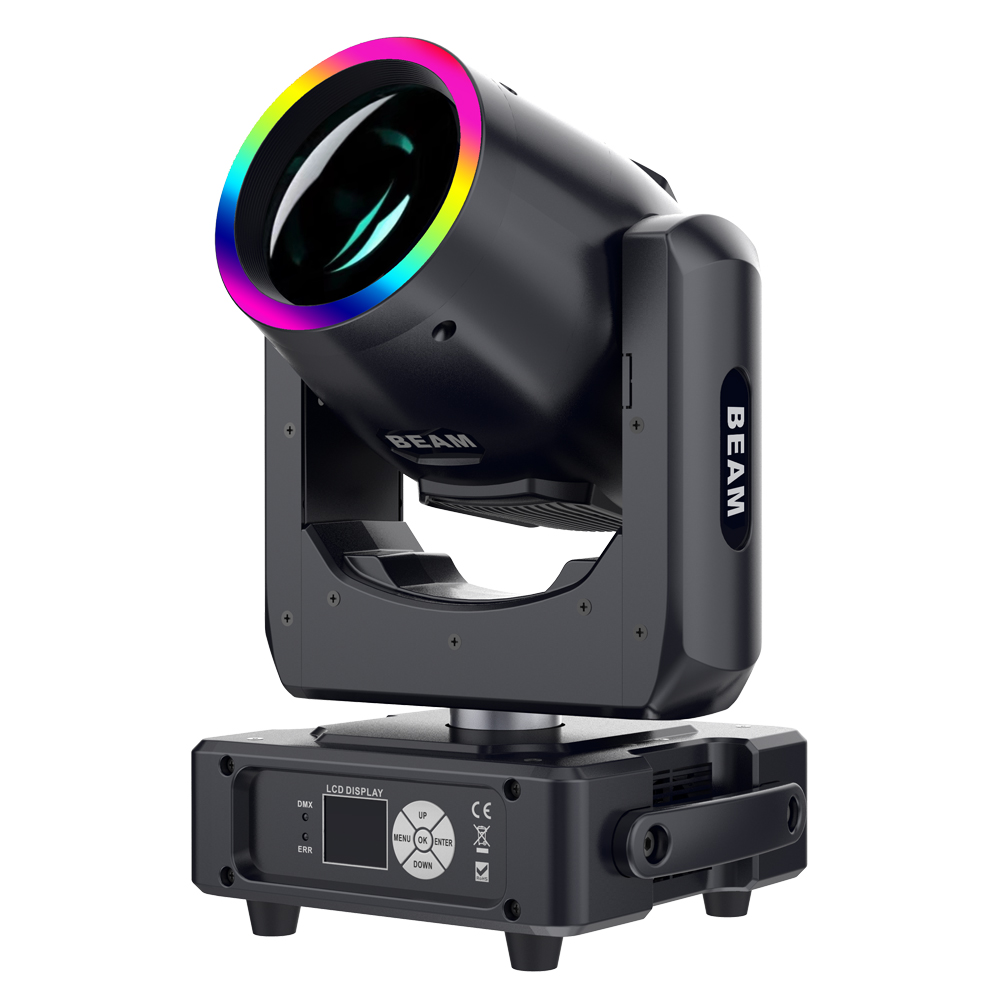
What it is: A 230W fixture with a 7R lamp — the classic small beam that has been the industry’s entry point for years. Compact body, professional output, easy to rig.
Where it fits: Small bars, party rooms, karaoke venues, private events and first-time buyers. The 230W’s small size means it mounts in tight spaces and ships in compact flight cases — which is why any beam 230 vs 295 vs 380 discussion starts with venue size.
Advantages: Lowest entry price, lightest weight, easiest power and DMX requirements, fast ROI in small venues.
Limitations: Shorter throw and less punch than higher wattages — in a large hall, a 230W beam visibly fades before reaching the back wall.
Our model: Allerno/Mini Beam 230 Moving Head — a classical 7R beam with compact body and professional output for small venues.
Beam 295W — The Balanced Standard
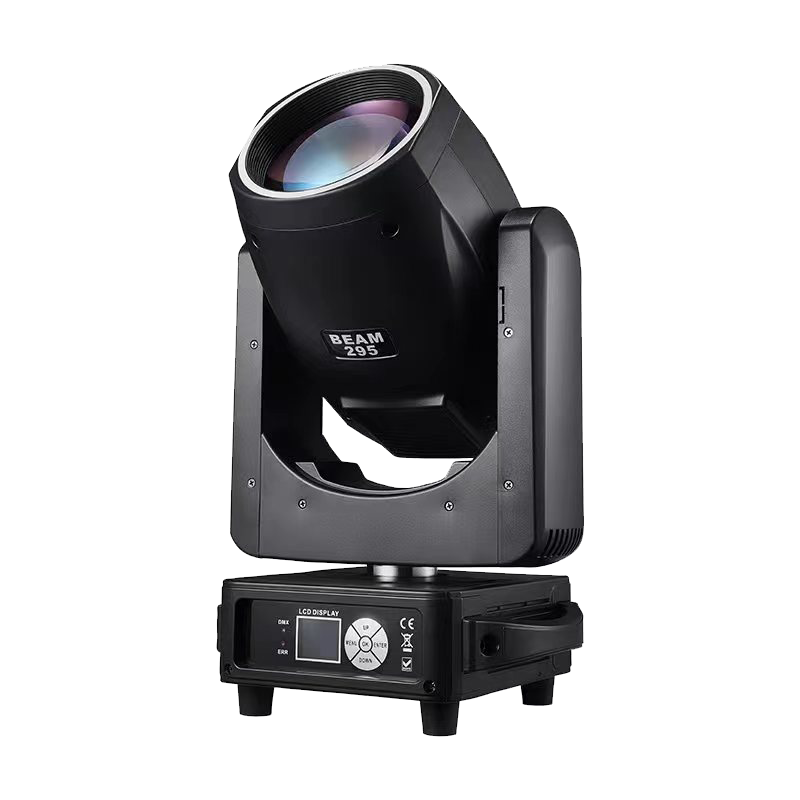
What it is: A 295W fixture with a 14R lamp and a 156 mm lens — the workhorse of the industry. This is the most common beam in bar, disco and event rental fleets worldwide.
Where it fits: Bars, discos, events, small-to-mid halls, and rental companies building their first fleet. The 295W is the “safe answer” when a client asks for something that will work everywhere — for most buyers, the beam 230 vs 295 vs 380 decision ends right here.
Advantages: The best balance of output, size, price and versatility — bright enough for venues up to a few hundred people, compact enough to tour, and priced to scale across a fleet.
Limitations: Not the ultimate long-throw option — for very large halls or festival stages, the 380W class pulls ahead.
Our model: Gram/Beam 295 Moving Head Light — 14R 295W with a 156 mm lens, bright for bar, disco and event use.
Beam 380W — The High-Output Standard
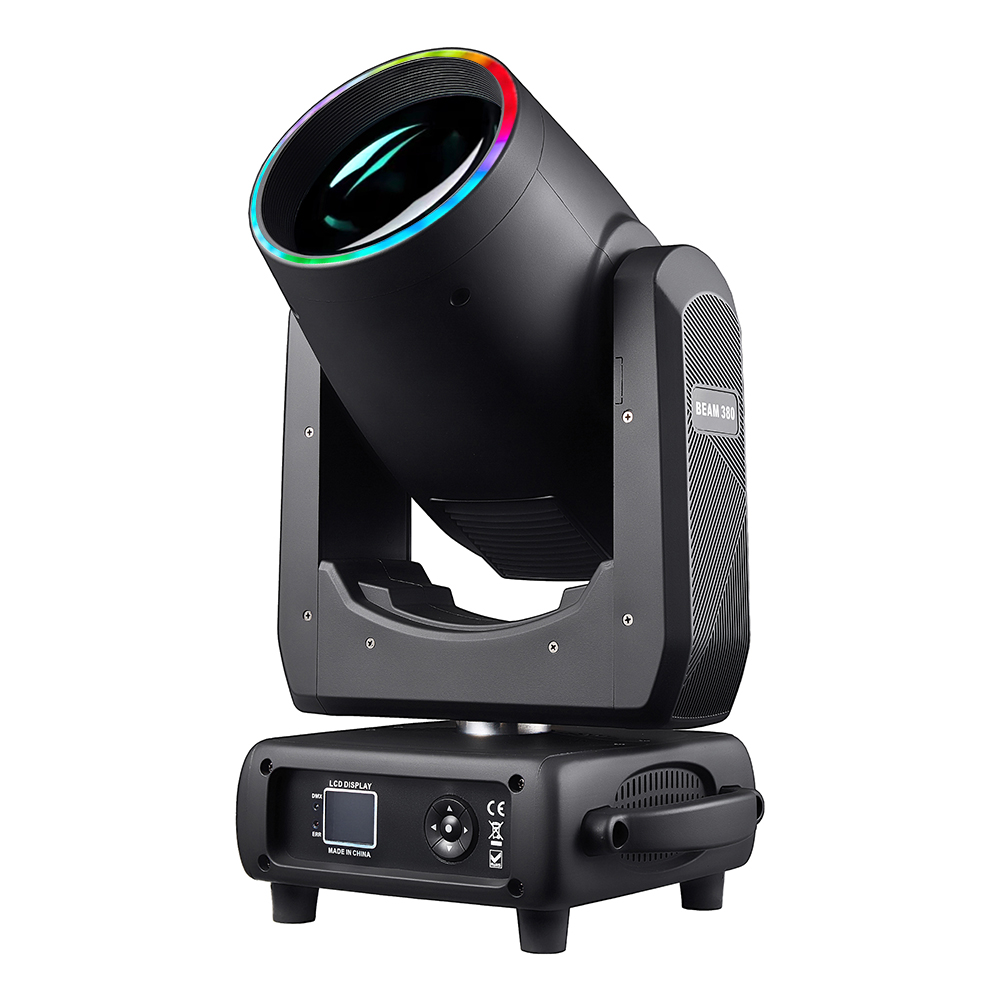
What it is: A 380W fixture with a 17R lamp and a 165 mm lens — the high-output tier of beam moving heads, typically offering rich color wheels and gobo options (14 colors, 14 gobos including 4 glass gobos on the Apophis model) for premium aerial looks.
Where it fits: Medium-large halls, concerts, stage productions, weddings with big dance floors, and rental companies serving premium events. The 380W is the choice when the venue is big enough that 230/295 beams visibly struggle — the beam 230 vs 295 vs 380 comparison only favors 380W at this scale.
Advantages: Maximum throw and punch, rich color and gobo options for unique looks, and the premium “wow” that justifies higher rental rates.
Limitations: Larger and heavier (stronger truss and motors required), higher price, higher power draw.
Our model: Apophis/380W Beam Moving Light — 17R 380W with a 165 mm lens, 14 colors and 14 gobos (4 glass) for bright, rich beams.
Side-by-Side Specification Comparison
| Spec | Beam 230 (7R) | Beam 295 (14R) | Beam 380 (17R) |
|---|---|---|---|
| Lamp type | 7R (230W) | 14R (295W) | 17R (380W) |
| Typical lens | Standard | 156 mm | 165 mm |
| Brightness | Entry-level | Bright | High-output |
| Throw distance | Short-mid | Mid-long | Long |
| Beam angle | Tight | Tight | Tight |
| Colors / gobos | Basic | Basic | 14 colors / 14 gobos (4 glass) |
| Size/weight | Mini | Mid | Large |
| Power draw | Low | Mid | High |
| Truss requirement | Light duty | Standard | Heavy duty |
| Best venue | Small bars, party rooms | Bars, discos, events | Medium-large halls, concerts |
| Price | $ | $$ | $$$ |
Which One Should You Buy? (By Scenario)
| Your situation | Recommended pick | Why |
|---|---|---|
| Small bar / karaoke / party room | Beam 230 | Compact, cheap, enough punch for the room |
| Venue up to a few hundred people | Beam 295 | The balanced standard — output, size, price |
| Rental fleet first purchase | Beam 295 | Most versatile, rents across job types |
| Medium-large hall / concert | Beam 380 | Long throw and prism looks for premium events |
| Wedding with big dance floor | Beam 380 | Maximum visual impact for the first dance |
| Budget-conscious first system | Beam 230 | Lowest entry cost, upgrade later |
The general rule: match the beam to the venue’s back wall. If the 230W’s beam reaches it clearly, save the money. If it fades, step up to 295W — and only step to 380W when the venue or the production demands long throw and premium looks. That rule collapses the entire beam 230 vs 295 vs 380 question into one measurement. Match the beam to the back wall, and the right beam 230 vs 295 vs 380 choice follows.
Frequently Asked Questions
What is the difference between a 230W, 295W and 380W beam moving head?
The wattage class determines brightness, throw distance, size and price: 230W (7R) is compact and entry-level for small bars; 295W (14R) is the balanced standard for venues up to a few hundred people; 380W (17R) is high-output with rich color and gobo options for medium-large halls and concerts. The beam 230 vs 295 vs 380 comparison is really a venue-size question.
Which beam wattage is best for a bar?
For most bars and party rooms, a 295W beam is the sweet spot — bright enough to fill the room with visible beams in haze, priced to scale across multiple units. Small bars with tight ceilings can start with a 230W and upgrade as the venue grows.
Which beam is best for a small venue?
The 230W is the classic small-venue choice: compact body, low power draw, professional output. If the venue seats more than a few hundred or has a deep stage, the 295W gives noticeably more punch for a modest price increase.
Is a 380W beam worth the extra cost?
Only if the venue or production needs it. The 380W class delivers noticeably longer throw, higher punch and richer color/gobo options — worth it for medium-large halls, concerts and premium weddings. For small bars, the extra power is wasted and the larger fixture is harder to rig.
Can I mix 230W, 295W and 380W beams in one system?
Yes — all three run on standard DMX512 control. Many rental companies mix them: 230/295W units for general coverage and 380W units for featured long-throw positions. Keep the DMX addressing and patch organized per fixture type.
How many beam moving heads do I need?
As a rule of thumb: 2–4 beams for a small bar, 4–8 for a mid venue, 8–12+ for a large hall or stage. Beams paint the air — pair them with wash fixtures (PARs or wash heads) for face and stage light.
What does Prism King mean in beam fixtures?
Prism King is a beam class known for advanced prism systems — multiple prism types with bidirectional rotation at variable speeds — creating richer, more complex aerial looks than basic single-prism fixtures. It is one premium tier of 380W beam fixtures; the Apophis 380W covered here instead packs 14 colors and 14 gobos (4 glass) for its high-output looks.
Do you offer a full beam package with different wattages?
Yes. Show Time supplies beam moving heads from 230W to 420W factory-direct — mix wattages to match your venue or fleet, with OEM/ODM branding and a 24-month warranty on core components. Send your venue size and fixture count and we’ll price the package within 24 hours.
Featured Fixtures
One representative from each power class, factory-direct:
Start Your Project
Tell us your venue size, beam wattage preference and quantity — we’ll recommend the right mix and send factory-direct pricing within 24 hours.
Show Time Stage Light — factory-direct professional stage lighting.
Get a quote — fill in the form and our sales team will reply within 24 hours:
Follow our latest models and case studies:
Facebook — Show Time Stage Light
References: Fixture specifications per Show Time Stage Light product data and industry standards (DMX512/ESTA, IEC 60598 series), checked 2026-08.
Related: Best stage lights for rental companies · Durable moving heads for rental · Stage lighting for weddings · Stage lighting for small venues